
How Much Is My RV Worth in 2026? RV Value, Trade-In, Dealer Offer, and Private Sale Guide
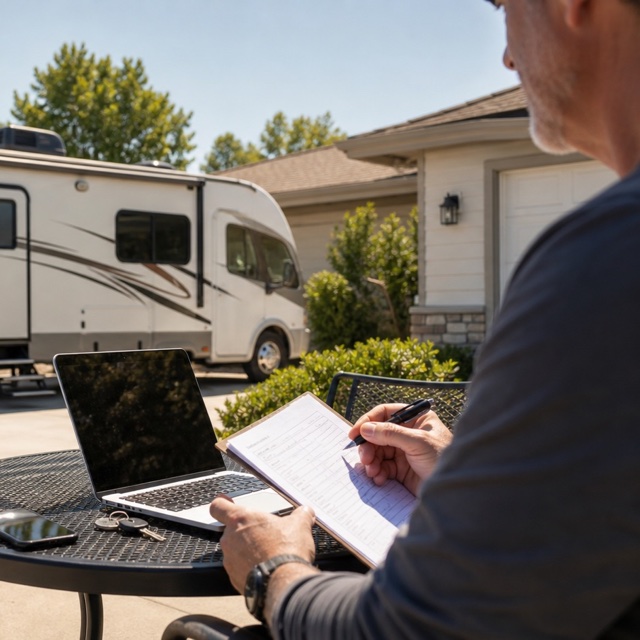
If you are asking "how much is my RV worth?", the honest answer is that your RV has more than one value. There is the price you might list it for, the amount a private buyer may actually pay, the trade-in number a dealer may offer, and the cash value a dealer can justify after transport, inspection, reconditioning, and resale risk.
This guide gives you a practical 2026 framework to estimate your RV value without guessing. Use it to set expectations, compare dealer offers, decide whether private sale is worth the work, and avoid leaving money on the table.
Last updated: May 2026
Author: RVbig Editorial Team
📌 In This Guide
- 💡 Quick answer
- 🧮 The four RV values sellers should understand
- 📈 2026 RV market context
- 🔍 The main factors that change your RV value
- 🧭 How to estimate your RV value step by step
- 📝 RV value worksheet
- ⚖️ Dealer offer vs private sale value
- 🤝 How RVbig helps sellers get real market feedback
- ❓ Frequently asked questions
- 🚀 Final checklist
💡 Quick Answer
Your RV is worth what a qualified buyer or dealer is willing to pay for your exact unit today, after accounting for model year, type, mileage or usage, floorplan demand, condition, title status, location, seasonality, and repair needs.
For most sellers, the best estimate comes from comparing three numbers:
| Value Type | What It Means | Best Use |
|---|---|---|
| Private sale asking price | The price you list publicly | Setting a starting point |
| Realistic private sale price | What a serious buyer may pay after negotiation | Estimating highest net upside |
| Dealer offer or trade-in value | What a dealer can pay while covering resale risk | Estimating fast-sale value |
| Wholesale or auction value | A lower market benchmark dealers may reference | Understanding dealer economics |
Do not rely on one online estimate by itself. Use book-value tools, comparable listings, condition adjustments, payoff details, and real dealer offers together.
🧮 The Four RV Values Sellers Should Understand
Many RV owners get frustrated because different sources give different numbers. That does not always mean one of them is wrong. It usually means each number answers a different question.
🏷️ 1. Asking price
Your asking price is the public number you put on a listing. It is often higher than the final sale amount because it leaves room for negotiation.
Asking price is useful, but it can be misleading. Some listings sit for months because the seller copied the highest comparable price instead of the closest realistic comparable.
👤 2. Private sale value
Private sale value is the amount a real individual buyer is likely to pay. It can be higher than a dealer offer, but the seller usually takes on more work:
- Writing and managing listings
- Answering messages
- Scheduling showings
- Handling inspections
- Verifying payment
- Managing title transfer and lien payoff
Private sale is often best when you have time, the RV is clean and desirable, and you are comfortable managing the transaction yourself.
🤝 3. Trade-in or dealer offer value
Dealer offer value is the amount a dealer can justify paying for your RV today. It is usually lower than an ideal private sale price because the dealer has to account for:
- Inspection and reconditioning
- Transport or pickup costs
- Holding time
- Warranty or goodwill risk
- Market demand for that floorplan
- Profit margin after resale
That lower headline number can still be the better net decision when you value speed, certainty, and lower transaction risk.
📊 4. Wholesale or auction value
Wholesale value is a dealer-to-dealer market reference. It is not always what a retail seller should expect, but it helps explain why dealer offers can differ from public listing prices.
If your RV needs repairs, has an unusual floorplan, or is located far from strong buyer demand, wholesale economics may matter more.
📈 2026 RV Market Context
RV values in 2026 are not moving evenly across every category.
Black Book's Q2 2026 RV market update describes wholesale RV values as normalizing in early 2026, with towables seeing more noticeable pressure than some motorhome segments. In practical seller terms, condition, age, mileage, and floorplan desirability matter more than broad averages.
RVIA's April 2026 shipment report also shows a mixed market: total shipments were lower year over year, towables were down, and motorhomes were up. That kind of split matters because a late-model Class B van, a high-content fifth wheel, and an older entry-level travel trailer may not follow the same pricing pattern.
The takeaway: do not estimate your RV value from the overall market alone. Start with your specific RV type and then adjust for your exact unit.
🔍 The Main Factors That Change Your RV Value
🚐 RV type and segment
Different RV types depreciate differently.
| RV Type | Value Sensitivity |
|---|---|
| Travel trailer | Often more price-sensitive because supply is broad |
| Fifth wheel | Condition and features can create larger value gaps |
| Class A motorhome | High repair and ownership costs can pressure older units |
| Class B motorhome | Compact size and usability can support demand |
| Class C motorhome | Family-friendly layouts may appeal to first-time buyers |
| Toy hauler | Value depends heavily on garage size, payload, and condition |
Start by comparing against the same type, not just any RV from the same brand.
⏱️ Year, mileage, and usage
For motorhomes, mileage matters because the chassis and drivetrain are part of the value. For towables, usage shows up more through tire age, roof condition, appliances, slide mechanisms, and interior wear.
Low mileage is helpful, but it is not magic. A low-mileage motorhome with deferred maintenance can be worth less than a higher-mileage unit with clear service records.
🛋️ Floorplan demand
Floorplan can matter as much as brand. Bunkhouse layouts, couples coaches, rear living layouts, bath-and-a-half motorhomes, and compact drivable RVs each appeal to different buyers.
Ask this question: how many buyers are looking for this exact layout right now?
✅ Condition and disclosure
Condition is where many estimates break. A clean RV with good photos, service records, and honest disclosures can attract stronger offers than a vague listing with hidden issues.
Value drops quickly for:
- Roof leaks or signs of water intrusion
- Soft floors or delamination
- Slide-out problems
- Generator issues
- Old tires
- Non-working air conditioning
- Missing title or unclear lien status
- Strong odors or heavy interior wear
If there is one issue sellers should never minimize, it is water damage. Buyers and dealers both price that risk aggressively.
📍 Location and seasonality
RV demand is local and seasonal. A unit may be easier to sell near large camping markets, snowbird routes, or dealer hubs. Timing also matters: spring and early summer usually bring more active shoppers, while late-season sellers may need to compete harder on price.
📄 Title, lien, and payoff status
A clean title is simpler. A financed RV can still be sold, but payoff coordination affects how buyers and dealers evaluate the transaction.
Before you compare offers, know:
- Current payoff amount
- Lender contact process
- Whether the title is electronic or paper
- Expected lien release timing
- Whether you are upside down
If payoff logistics are complicated, a dealer offer may be more attractive than a private sale even if the headline price is lower.
🧭 How to Estimate Your RV Value Step by Step
1️⃣ Step 1: Collect exact unit details
Write down:
- Year, make, model, and trim
- VIN
- RV type and floorplan
- Mileage or estimated usage
- Generator hours, if applicable
- Major options and upgrades
- Known issues
- Title and lien status
- Current location
Small details can change value. A floorplan code, premium package, solar setup, or upgraded suspension can matter.
2️⃣ Step 2: Pull comparable listings
Find 5 to 10 comparable listings that match your RV as closely as possible.
Prioritize:
- Same year, make, model, and trim
- Same floorplan
- Similar mileage or condition
- Similar region
- Active listings and recently sold examples, when available
Ignore obvious outliers. The highest advertised listing is not your market value if it has been sitting unsold.
3️⃣ Step 3: Adjust for condition
Use your cleanest comparable as the starting point, then adjust down for condition issues.
| Condition Item | Typical Impact |
|---|---|
| Excellent photos and clean interior | Supports stronger offers |
| Complete service records | Reduces buyer uncertainty |
| Newer tires and batteries | Helps avoid easy deductions |
| Minor cosmetic wear | Usually negotiable but manageable |
| Appliance or slide problems | Can create meaningful deductions |
| Water damage | Often a major value hit |
| Missing title or unclear payoff | Reduces buyer confidence |
Do not wait for buyers to discover problems. Price them in and disclose them clearly.
4️⃣ Step 4: Estimate your private sale range
Set three numbers:
- Optimistic asking price: what you would list if time is not urgent
- Expected sale range: what you think a serious buyer may pay
- Walk-away floor: the lowest net amount you would accept
This prevents emotional decisions when offers arrive.
5️⃣ Step 5: Compare dealer offers
Dealer offers give you a real market check. A dealer offer may not match your highest private sale expectation, but it tells you what the unit is worth to a buyer who understands reconditioning, resale demand, and inventory risk.
If you only get one dealer quote, you do not know whether it is strong. Multiple dealer offers are more useful because they show a range.
📝 RV Value Worksheet
Use this worksheet before you decide how to sell.
| Question | Your Answer |
|---|---|
| Exact year/make/model/trim | |
| Mileage or usage | |
| Floorplan highlights | |
| Known issues | |
| Tire age | |
| Roof and water-intrusion status | |
| Service records available? | |
| Title or lien status | |
| Payoff amount, if any | |
| Best comparable listing price | |
| Lowest realistic comparable price | |
| Target private sale price | |
| Walk-away floor | |
| Best dealer offer received |
After filling this out, you should have a value range, not a single magic number. That is the goal.
⚖️ Dealer Offer vs Private Sale Value
The best option depends on your priorities.
| Priority | Better Fit |
|---|---|
| Highest possible price | Private sale |
| Fast sale | Dealer offers |
| Fewer messages and showings | Dealer offers |
| Maximum control | Private sale |
| Easier payoff coordination | Often dealer offers |
| Selling a very clean, in-demand RV | Compare both |
| Selling with issues or time pressure | Dealer offers may be cleaner |
Private sale can win on price. Dealer offers can win on speed, certainty, and effort. The smart move is not guessing which is better. It is comparing both with the same facts.
For a deeper breakdown, read RV selling: Dealer Offers vs. Private Sale vs. Consignment.
🏬 What Dealers Look At Before Making an RV Offer
Dealers are not only asking, "What could this sell for?" They are asking, "What can we pay after risk?"
That includes:
- Expected retail resale price
- Reconditioning budget
- Transport cost
- Days-to-sale expectation
- Local buyer demand
- Financing availability for the next buyer
- Whether similar units are already on the lot
This is why two dealers can give different offers for the same RV. One may need your floorplan. Another may already have too much similar inventory.
✅ How to Improve Your RV Value Before Requesting Offers
You do not need to remodel the RV before selling. Focus on low-cost actions that increase confidence.
✅ Do these first
- Clean the interior thoroughly.
- Wash the exterior and windows.
- Remove personal items.
- Photograph in bright natural light.
- Gather service records.
- Confirm tire date codes.
- Test appliances, lights, slides, generator, and water systems.
- Write a short issue list instead of hiding problems.
⚠️ Usually skip these
- Expensive upgrades that buyers may not value
- Major cosmetic projects with uncertain return
- Replacing good working equipment only to make the listing sound newer
- Overpricing because you spent money on repairs years ago
The goal is not perfection. The goal is trust.
🗣️ Script: Ask for a Cleaner RV Value Estimate
Use this when contacting dealers or comparing offers:
"I am evaluating my [year/make/model/floorplan] and want a realistic purchase offer, not just a rough trade-in guess. I can provide photos, mileage, title/payoff status, service history, known issues, and location. Please include any assumptions that affect the offer, such as inspection, pickup, reconditioning, or title timing."
Why this works:
- It signals that you are organized.
- It gives dealers the information they need.
- It reduces vague low-confidence responses.
- It helps you compare offers more fairly.
🤝 How RVbig Helps Sellers Get Real Market Feedback
RVbig is useful because it turns your RV value question into a real offer-comparison process.
Instead of guessing from listings alone, you can submit your RV details through RVbig Sell and let participating dealers review the same information. That helps you compare:
- Offer amount
- Timing
- Pickup or delivery assumptions
- Condition requirements
- Payoff or title considerations
- Overall convenience
You are not forced to treat a dealer offer as the only answer. You can use it as a market benchmark, then decide whether private sale effort is worth the possible upside.
If you are selling because you plan to buy another RV, pair this process with How to Get the Best RV Price Without Haggling and RV Out-the-Door Price Guide.
❓ Frequently Asked Questions
What is the best way to find out how much my RV is worth?
Use a mix of comparable listings, book-value references, condition adjustments, and real dealer offers. One source alone can be misleading because RV value depends heavily on the exact unit and current buyer demand.
Is NADA or a book value enough to price my RV?
Book values can be useful as a starting point, but they should not be the only input. Your RV's floorplan, condition, local market, photos, title status, and buyer demand can move the real sale price above or below a published estimate.
Why is a dealer offer lower than my private sale price?
A dealer has to account for inspection, repairs, transport, holding time, resale risk, and margin. A private buyer may pay more, but you usually do more work and carry more transaction risk.
Does mileage matter for RV value?
Mileage matters most for motorhomes because the engine and chassis are part of the vehicle. For travel trailers and fifth wheels, condition, roof health, tire age, appliances, and floorplan demand usually matter more than mileage.
Can I sell my RV if I still have a loan?
Yes, but you need the current payoff amount and a clear title-release process. A dealer may be able to coordinate payoff more easily than a private buyer, especially if timing is important.
Should I repair my RV before selling it?
Repair safety issues and simple confidence-killers first. Be cautious with expensive upgrades or cosmetic projects unless they clearly improve value. Sometimes an honest disclosure plus a fair price is better than over-investing before sale.
When is the best time to sell an RV?
Spring and early summer often bring more active shoppers, but the best timing depends on your RV type, location, and urgency. If you need speed, compare dealer offers instead of waiting for a perfect seasonal listing window.
🚀 Final Checklist
Before you decide what your RV is worth, make sure you have:
- Exact year, make, model, trim, and floorplan
- Current mileage or usage details
- Clear photos inside and outside
- Honest condition notes
- Title and lien payoff details
- Service records and upgrade receipts
- Comparable listings
- A target price and walk-away floor
- At least one real dealer offer, ideally more than one
Your RV value is not just a number from a website. It is a range shaped by the market, your unit, and the selling path you choose.
When you are ready to test the market, start with RVbig Sell and compare real dealer feedback before committing to a private sale, consignment, or trade-in path.
Ready to see offers?
Submit a buy or sell request through RVbig in just a few minutes and let verified dealers send their best offers.